The University of Washington REACH Center is currently hosting the Implementation and Evaluation (I&E) Fellowship, designed for health practitioners and researchers. The fellowship guides interdisciplinary teams of two to three fellows through 18-month projects that apply implementation science to strengthen evidence-based climate and health adaptation strategies. This is the third in a series of articles featuring REACH Fellow teams.
The Wildfire Smoke Interventions team is exploring how to implement climate-related health interventions in clinical healthcare settings. The team includes Meagan Brown, PhD, MPH, of Kaiser Permanente Washington Health Research Institute; Raj Sundar, MD, of Washington Permanente Medical Group; and Bradley Kramer, PhD, MPA, of Public Health Seattle & King County.
From exam room to extreme heat
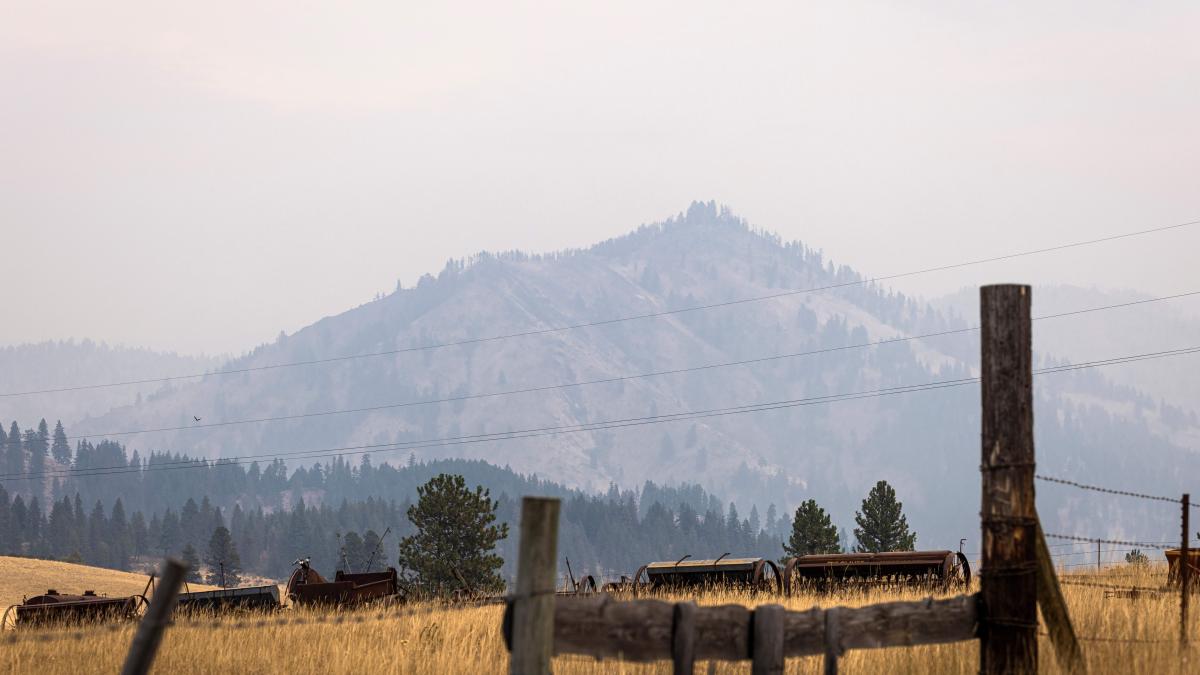
The team defines wildfire smoke interventions as health practices and strategies that protect communities from the adverse health effects of wildfire smoke, such as home air filters, air quality monitoring, or N95 masks that limit inhalation of harmful particles.
They explain that as wildfires have grown more frequent in recent years, certain groups face heightened risk of smoke-related health complications, including older adults, people with cardiovascular conditions, and those with asthma.
The Wildfire Smoke Interventions team is partnering with Public Health Seattle & King County to mitigate the impacts of wildfire smoke on patients with asthma and to evaluate, adapt, and implement a wildfire smoke practice resource for primary care providers.
Drawing on input from both patients and providers, the team wants to develop an intervention that includes patient preparedness materials, clinician guidance, and a toolkit for consistent conversations and documentation. It also includes Single Maintenance and Reliever Therapy (SMART), an asthma management approach that uses a combination inhaler to control inflammation and provide rapid symptom relief.
“I see so many of my patients and community members affected directly by it,” says Raj Sundar. “People are suffering from the secondary effects of weather-related changes right now, which include extreme heat and wildfire smoke, and I felt like it was important for me, my organization, and teams to know exactly what to do when we're faced with incidents like this.”
Sundar is a district medical director for South Sound at Kaiser Permanente Washington and leads the organization's Health Equity Action Team with over 400 members.
The fellow's insights illustrate that protecting community members from wildfire smoke shouldn't fall solely to climate mitigation experts and community organizations; healthcare providers also have a role to play. Climate adaptation shouldn't be an individual burden. It needs to be built into our institutions.
Meeting patients where they are
The Wildfire Smoke Interventions team is eager to work in an interdisciplinary setting. They believe that interdisciplinary teams expand the resources and toolkit available to do good work.
“I've worked in a lot of interdisciplinary teams, and one thing that's super helpful and meaningful is to work with people with different perspectives, different organizations, and different backgrounds. When we talk about a specific problem, they're able to see it in a way I can't, which naturally leads to different, often creative, solutions,” Sundar shares.
The team is ready to work in a space where community fit and intervention reach are prioritized over pure innovation. In the medical field, new developments are often prioritized over improving existing practices, even when those practices don't yet reach everyone who needs them.
A key part of bridging that gap is identifying the end audience. For this team, that means educating practitioners so they, in turn, can educate their patients, the ultimate audience for this intervention. Understanding the social and cultural values that influence how care is delivered is equally essential.
Sundar names limited access to air conditioning and a lack of housing as factors intricately connected to climate and health-related issues in King County. While pre-existing health conditions can often increase an individual's risk of being adversely affected by environmental extremes such as extreme heat and heavy wildfire smoke, social and cultural conventions can exacerbate those impacts and sometimes play an even more significant role.
One of the team's biggest anticipated challenges is the sheer volume of information clinicians must communicate to patients day-to-day. When patients are given more information than they can absorb, it can become overwhelming.
“Our focus right now is wildfire smoke, but we also communicate about blood pressure, diabetes, cancer prevention, mammograms, Pap smears, and the sheer amount of communication that comes out in a healthcare organization can sometimes feel like a barrier,” says Sundar.
Additionally, Sundar explains that many patients distrust healthcare institutions. So, even if they receive information about wildfire smoke, they might disregard it.
Implementing a new standard
In August, the Wildfire Smoke Interventions team participated in the Implementation Science Summer Institute, a short but intensive course in implementation science research. They hope the experience will help them look beyond their own expertise and gain insight into how to improve healthcare systems from different perspectives.
For their pilot project, the team aims to integrate wildfire smoke and extreme heat guidelines into routine clinical practice.
"My hope is that it embeds wildfire smoke and extreme heat guidelines as a key part of healthcare itself," Sundar explains. "We treat it just like hypertension and diabetes when we reach out to patients and talk about preventive care."
- Heat
- Reach Center