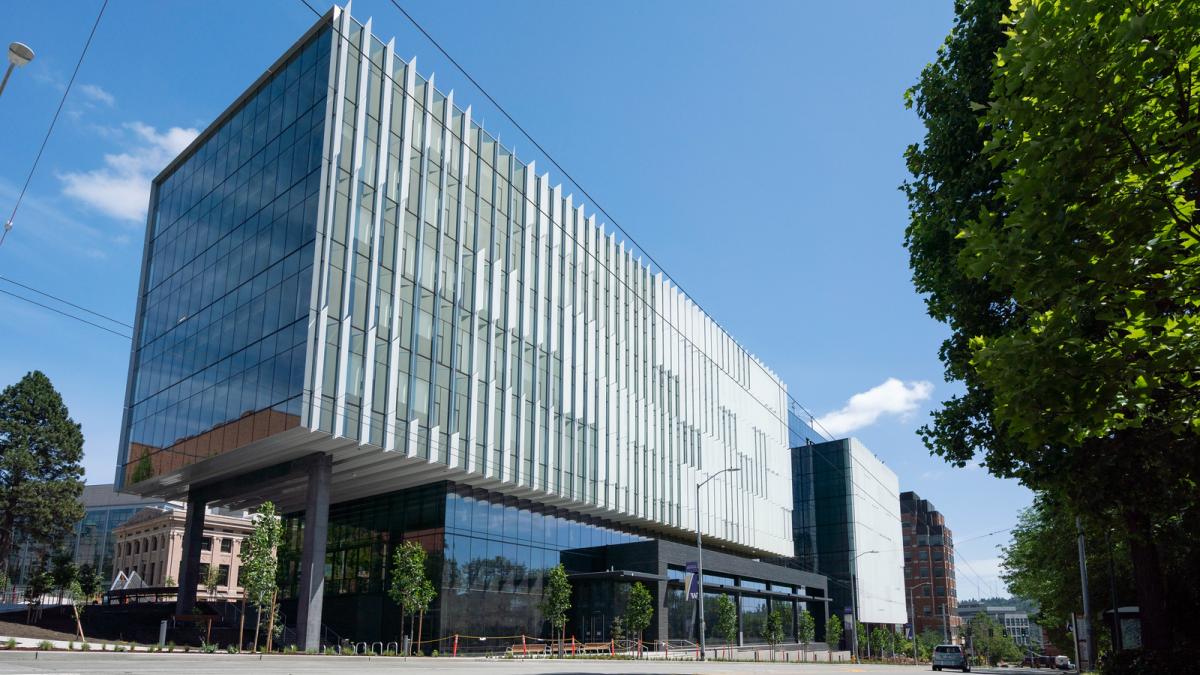
CHanGE’s impact starts with its people – an interdisciplinary team of researchers, teachers, practitioners, and students who are helping advance our vision of a world where climate action protects health and health action builds climate resilience. These passionate individuals contribute in many ways behind the scenes and their perspectives strengthen the work we do. This blog is the first in a series highlighting the stories and experiences of our newest members.
Yasna Palmeiro Silva, PhD, MPH, RN
Postdoctoral scholar
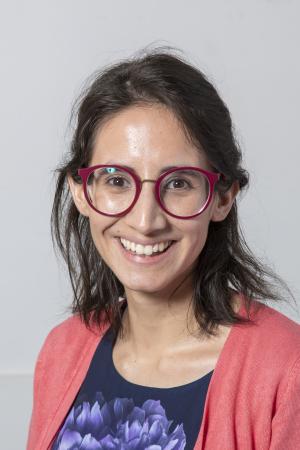
In July 2025, Palmeiro relocated from London to Seattle to join CHanGE as a postdoctoral fellow. A nurse by training with a diverse academic background, she works at the intersection of climate, health, and adaptation. She first connected with Jeremy Hess, MD, MPH, director of CHanGE, in 2023 through a Lancet Countdown Working Group, a specialized team of global experts collaborating on climate and health work. After this, she joined CHanGE to continue similar work with Hess and dive deeper into adaptation.
Palmeiro started her career as an intensive care unit nurse in Chile and was alarmed by the increasing number of young patients with cardiovascular disease. That experience led her toward public health because of its focus on upstream prevention. She then earned her master’s degree in public health epidemiology and later her doctorate in global health.
Recognizing the importance of a holistic lens, she also received postgraduate diplomas in biostatistics and public policy. Her interdisciplinary training allows her to solve problems from multiple angles. “The intersection of climate and health is unique in terms of the disciplines you need to have involved because it's not just health. It's not just climate. It's the combination of both and many other systems,” she explains.
Palmeiro’s motivation to work in climate and health centers on the urgent need to adapt health systems that were built for a climate that no longer exists. “Climate change pressures every system,” she shares. “If we do not adapt, everything that we do based on the past climate will fail in the future.”
Palmeiro is drawn to CHanGE’s focus on translation and implementation. After years in academic research environments, she values the center’s commitment to applying findings to real-world settings. Palmeiro also feels energized by the international reach of CHanGE, noting her recent trip to Chile, where she presented Lancet Countdown indicators related to heat and occupational health. What stands out to her the most about CHanGE, though, is the center’s driven team and collaborative environment where “everyone supports each other and learns from each other,” she says.
Looking ahead, Palmeiro sees her future in academia and views CHanGE as an important part of that path. When asked what keeps her motivated, she emphasizes values of humility and collaboration, sharing, “No one has the full answer to these complex problems alone, but if we work together, maybe we can get those answers and build something useful for people.”
Sam Sellers, PhD
Research coordinator
Sellers recently re-joined CHanGE as a research coordinator. His initial affiliation began in 2017 as a postdoctoral fellow, spending two years working on projecting climate-related health burdens using the Shared Socioeconomic Pathway (SSP) framework, which uses scenarios to understand how social and economic conditions are likely to vary based on future decisions regarding adaptation and mitigation. Now, he is helping to advance Wellcome Trust-funded work that builds on that foundation – updating and refining SSP narratives to better understand future health risks. The return feels familiar, he notes, but with new energy: the SSPs have evolved, and he brings new experiences back to the work.
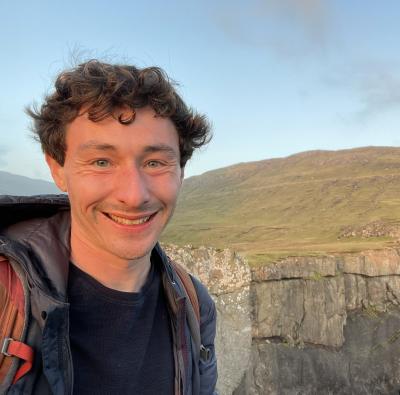
With an interdisciplinary background, Sellers is drawn to the intersection of institutions, people, and the environment. He holds an undergraduate degree in political science and a doctorate in ecology, with a focus on population-environment interactions. Along the way, Sellers was trained as a demographer and served on the editorial board for the journal Population and Environment. He later joined the U.S. Agency for International Development (USAID), spending five years working on biodiversity conservation, climate adaptation, and reproductive health. Those experiences expanded his understanding of how environmental change impacts human well-being and how research, policy, and practice could be better aligned.
His motivation to work in the climate and health space stems from both urgency and possibility. “The potential magnitude of climate impacts on health motivates me to think about the ways those impacts may manifest and possible adaptation strategies,” he explains.
He has also witnessed how rapidly the field has evolved. Sellers describes CHanGE’s founding director, Kris Ebi, PhD, MPH, and other early leaders, as “visionary” for advancing climate-health research in the early 2000s when the field was largely overlooked. The changing landscape, he notes, represents an opportunity to advance research and build tools that address health impacts related to climate change – a major focus at CHanGE.
While Sellers acknowledges there is much more to be done, he finds the progress encouraging. “We’re in a much better spot than we were a decade ago,” he says. “I anticipate that in five or ten years we will be in an even better spot. How much better is contingent on the work that CHanGE and similarly-minded organizations are doing, but the trend is moving in the right direction.”
Matt Smith, PhD
Research scientist
Smith joined CHanGE in fall 2024 as a research scientist after spending nearly a decade working for the T.H. Chan School of Public Health at Harvard. He is particularly interested in climate as it relates to agricultural impacts and planetary health – how we as humans are affecting our environment and how those changes are coming back to impact our health.
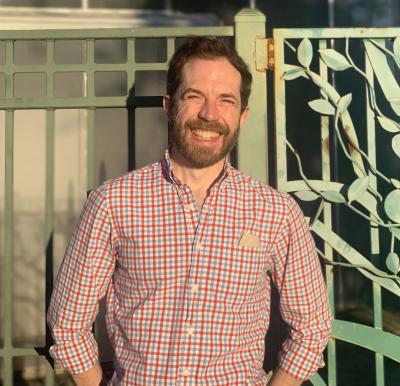
Smith is not new to Seattle. He completed his doctorate in earth and space sciences at the University of Washington in 2012. After graduating, he started consulting work that exposed him to topics like agriculture, food systems, and the interplay between humans and the environment. Intrigued by these topics, he secured a position at Harvard, where he was able to explore how the environment impacts our food and, thereby, our health.
Working for Harvard remotely from Seattle, his return to the UW was driven by a desire for in-person collaboration. One project Smith is working on at CHanGE is a national model that predicts pollen concentrations throughout the year. It allows people with severe allergies or asthma to be aware of predictions and protect themselves accordingly. Smith is also excited about the longer-term potential in the work – exploring how climate change may alter pollen patterns.
Smith has also been working on the updated version of the Community Heat Resilience Tool (CHaRT), which identifies heat-related health risks in communities across the U.S. He has been refining recommended interventions in the tool so decision makers and communities can develop effective plans to protect people’s health. This, along with the pollen model, are examples of what he views as one of CHanGE’s defining strengths – practical implementation of research. “These projects are things that can be applied and used by people to protect themselves and others,” he explains. “It’s a tangible effort to help.”
Smith has spent a lot of time thinking about the feedback loop between humans and the environment, asking questions like: “How do we continue to live on a planet that we are altering in ways that affect everyone’s health?” That’s why CHanGE’s work feels so meaningful for him. “Being part of a community that is trying to answer questions like this and address one of the biggest issues confronting our species is really fulfilling.”
- Faculty Spotlight
- Food Systems
- Heat